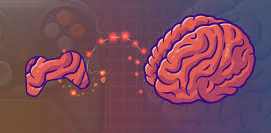
Do you think video games rot your brain, as many people claim they do? Well, you will soon see that you are incorrect. Students should be able to play video games in school because they improve hand-eye coordination, reset the mind, provide stress relief, and have real-life applications.
Improves Hand-Eye Coordination
Playing video games can improve your hand-eye coordination. When you use controllers, you move your fingers, which helps build fine motor skills. Fine motor skills also help people write and pick up objects. Hand-eye coordination can help you perform everyday tasks in life. An example of a type of game that helps with hand-eye coordination is VR (virtual reality).
Real-Life Applications
Specific games have real-life applications. In farming games, you can learn to farm carrots, potatoes, and corn. In Minecraft, you learn to build, and you can become interested in architecture. In games like Gimkit, Blooket, and Kahoot, you can review different subjects like math, reading, and world languages. Virtual Reality can help you move your entire body to stretch and exercise, and help you move your body in a way that prevents injury.
Stress Relief
Video games can reset your mind. If you are doing a test and it is hard, you can get stressed. You don’t do your best learning when you are stressed. If there is a video game period between your tests, it will make you feel less stressed and relieved. They can also be a great break when you have a lot of homework to do.
Real-World Applications and Career Readiness
Video games are “flight simulators” in real life. In Minecraft, students act as architects and structural engineers, translating abstract geometry into 3D structures. In ELA, building “lore” for digital worlds can turn reluctant writers into passionate storytellers. Platforms like Gimkit and Kahoot have already proven that gamified learning increases engagement in math and reading. These aren’t just games; they are interactive textbooks that teach agriculture, physics, and coding in ways a lecture never could.
Video games in school would be really fun and help with skills like hand-eye coordination. Having a video game period can reset your mind and help with stress relief. Finally, some video games have real-life applications and can help with learning. So what do you think? Will you ask Mr.Marchese about whether we could have games in school?
Works Cited
Belsky, Gail, and Jodi Gold. “6 surprising benefits of video games for kids.” Understood, Chicago, 20 feburary 2020, https://www.understood.org/en/articles/surprising-benefits-of-video-games. Accessed 27 February 2026.
Belsky, Gail, and Jodi Gold. “6 surprising benefits of video games for kids.” Understood, https://www.understood.org/en/articles/surprising-benefits-of-video-games. Accessed 9 March 2026.
Boudreau, Emily. “Can video games help kids learn? | Harvard Graduate School of Education.” Harvard Graduate School of Education, 29 June 2021, https://www.gse.harvard.edu/ideas/usable-knowledge/21/06/find-fun. Accessed 8 March 2026.